Address
Ashfield, Massachusetts, USA
In-person visits by appointment only.
Work Hours
Monday to Friday: 7AM - 5PM
Weekend: 10AM - 2PM
Address
Ashfield, Massachusetts, USA
In-person visits by appointment only.
Work Hours
Monday to Friday: 7AM - 5PM
Weekend: 10AM - 2PM
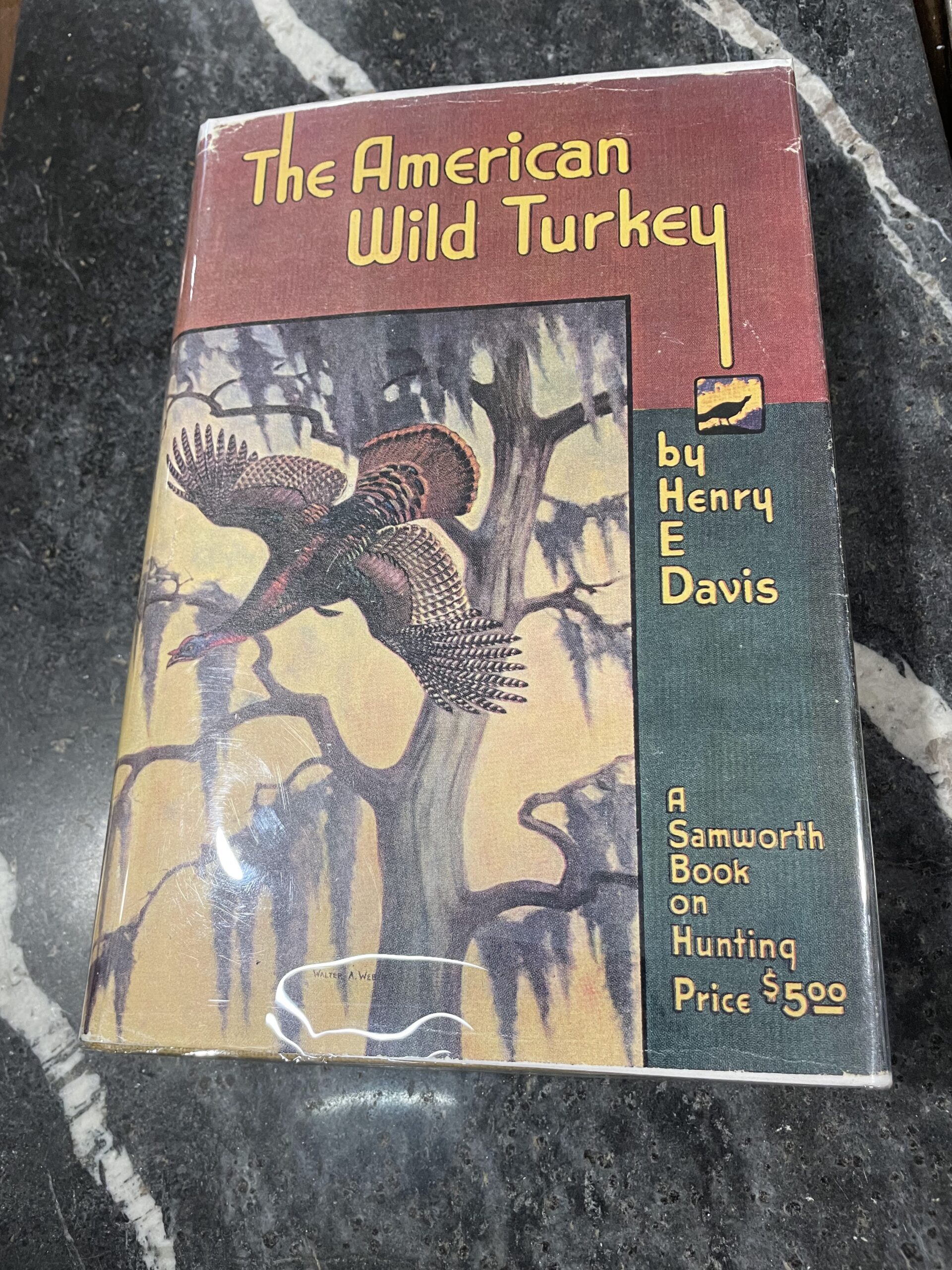
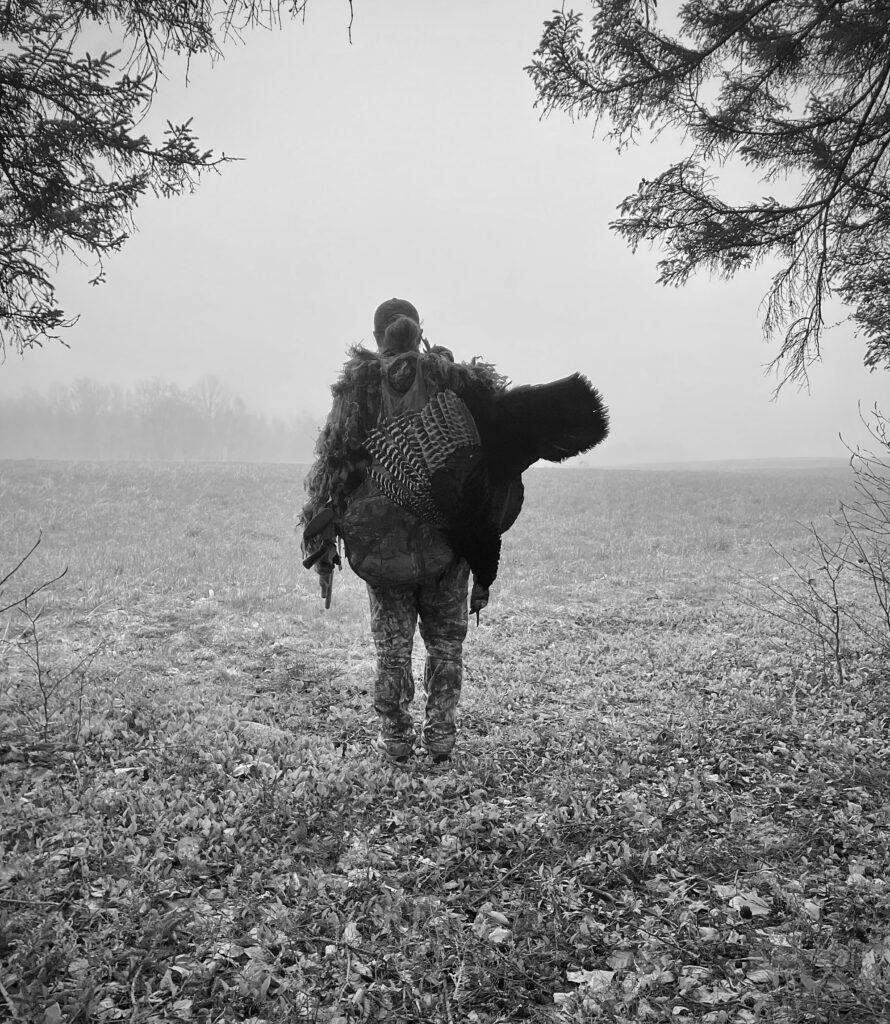
Spring is fickle here in New England. Cold temperatures, wind, snow, and rain have a way of keeping things interesting. I’ll admit, there are days I sit next to the window scrolling through Zillow, perusing real estate further south. But eventually, spring wins, and with spring comes the emergence of the wild turkey, eager to start their mating displays. I was late to turkey hunting–taking my first trip with an experienced friend when I was in my late 20s in the Piedmont region of North Carolina. Although we came home empty handed that day, it was clear that the run-and-gun style of turkey hunting was right up my alley. I dabbled for a few years, doing more reading about turkeys than actual hunting. Authors such as Tom Kelly, Charlie Elliott, Joe Hutto, Herb McClure, and Jim Spencer were regulars in the rotation. Eventually, I found Archibald Rutledge and Henry Davis–both of whom wrote about the terrain in which I was learning to locate and hunt birds. Today, I am a bit more of a seasoned turkey hunter, although not without plenty to learn, and I find myself not just reading about hunting, but selling hunting books, too. Davis’s ‘The American Wild Turkey‘, published in 1949, remains one of the most sought after titles in the field.
Davis was a lawyer in South Carolina, as well as a historian, furniture maker, horticulturalist, and maker of both turkey calls and firearms, the most famous of which was arguably his W.W. Greener custom shotgun, described beautifully in a 2010 article by Ben Moise for Garden & Gun. Moise also went on to edit ‘A Southern Sportsman: The Hunting Memoirs of Henry Davis’, published in 2010. Davis would author just one title: ‘The American Wild Turkey‘ (1949). It is still considered among the best turkey hunting books ever written. Sporting Classics Daily described the book more eloquently than I ever could: “Although first published almost three quarters of a century ago, it remains the gold standard, the sine qua non, for anyone anxious to delve deeply into the sport’s myriad secrets and subtleties and represents the cornerstone of any representative library on turkey hunting. Meticulously written and researched, graced by deep practical experience and comprehensive in coverage even though written in an era when fall turkey hunting was standard, it is a masterpiece, a classic in every sense of the word.”
Awkwardly, our copy of ‘The American Wild Turkey’ sold between when I began writing this blog and today. However, I will be actively trying to track down another copy!
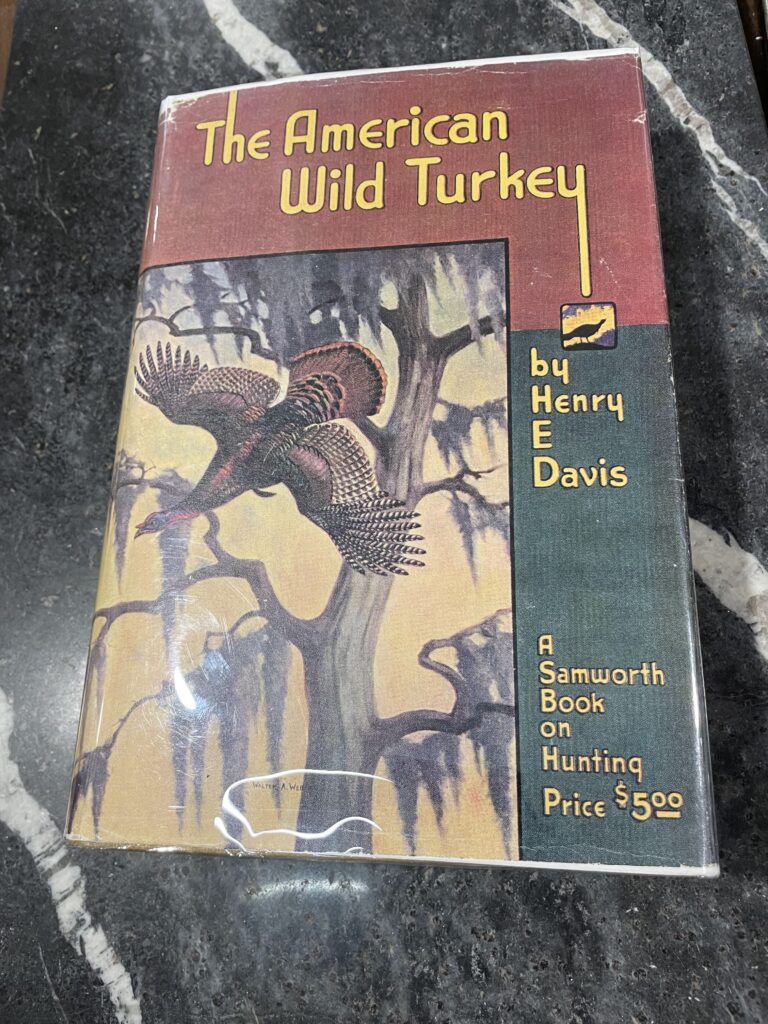
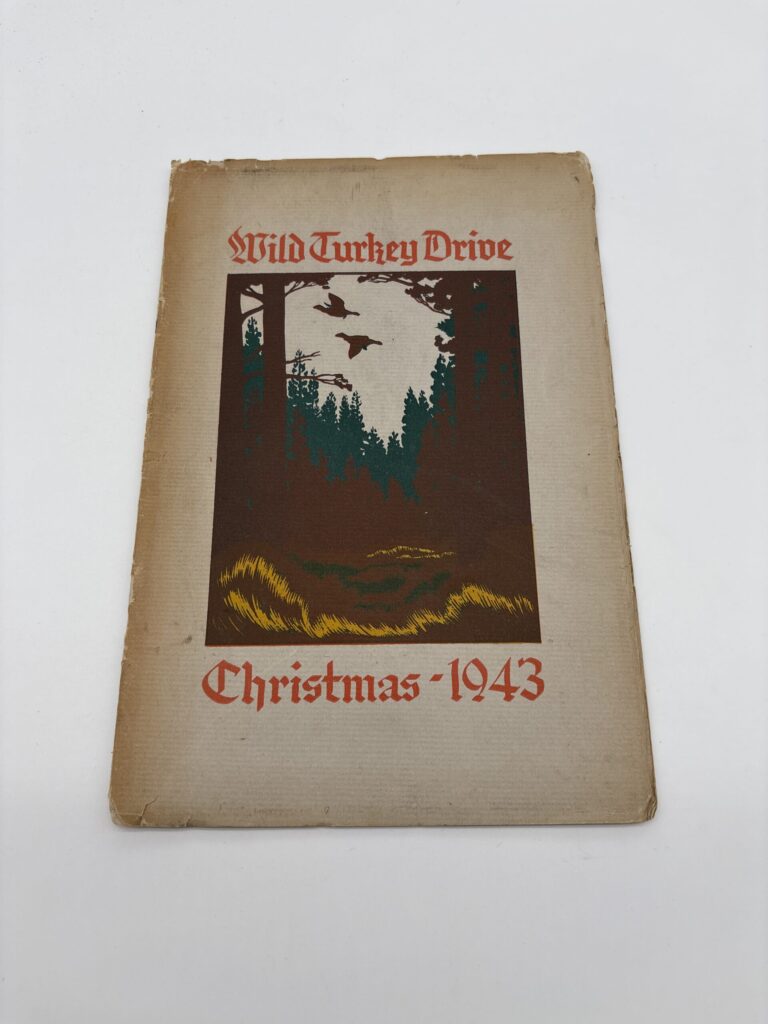
Turkey-centric books never seem to last long in our inventory. I understand why. It is a niche of hunting with deep roots in American history. I think it also produces more fanatical hunters, those simply obsessed with the animals they pursue, than any other type of hunting. I am fortunate to currently stock ‘Wild Turkey Drive: Christmas 1943‘ by Hoffman Phillip. It is an extremely rare book(let), technically deemed a first edition. It was limited to 200 copies, signed by the author and his wife. From the Mossy Oak Bottomland Book Club, “It is the first truly limited edition turkey hunting book, and written at a time when you could count the number of published books dedicated to wild turkey hunting on one hand. Consider that wild turkey populations were yet at record-low levels across much of the country. The tide was set to turn, with the Pittman-Roberson Act of 1937 creating funds for wildlife programs through gun and ammunition sales taxes, and the 1940 Federal Wildlife Restoration program bill passage. The Florida-Georgia line was one of few places in the country in the early twentieth century where you could find a drove of turkeys. With few exceptions, turkey hunting in that period of our nation’s history was a fall affair. Without adequate means to preserve meat, winter larder’s were stocked in late fall. The gregarious flocks of turkeys provided challenging sport and excellent table fare for hard working Americans. Fall hunters today still employ many of the tactics used then. Food sources for turkeys were critical to locate–some busted flocks with dogs, and others pursued gobblers with great obsession. One of the traditions then was something most people would more identify with deer hunting, that being a wild turkey drive. Native Americans were known to drive game, even using burns to aid the drive, this having a peripheral benefit of creating early successional habitat for the next year’s brood-rearing.”
Although Phillip typically wrote his Christmas publications about travel, he and a number of his close friends assigned a certain reverence to turkey hunting. In the book, Phillip tells the tale of a turkey hunt, starting from the night before and ending with the celebration of a successful hunt. A bonus quail story is thrown in, too.
We also have a few turkey hunting books in our eBay store, including ‘The Flighty Prince’ by Kitty Milbank (1963)–a privately printed first edition.
Turkey season is still about a month away for me, but you can bet that my kids, wife, and I will be running ridges here in the hills of western Massachusetts–calling for turkeys, foraging wild edibles, and becoming savvy woodsmen and women. So much of turkey hunting is simply being savvy in the woods–taking the long way around, being patient, learning to blend in, and sounding natural. If you can do those things, there is a good chance you’ll get a crack at that gobbler this spring. Best of luck to all in the field and in tracking down those elusive turkey hunting titles!